Overview
Stage trains in monthly cycles with fixed A and B workouts. Trainees did not have one place to see their weights, their last workout or their progress. I built that app for the studio. I also asked a marketing question: how does a gym app bring in new members?
The marketing idea
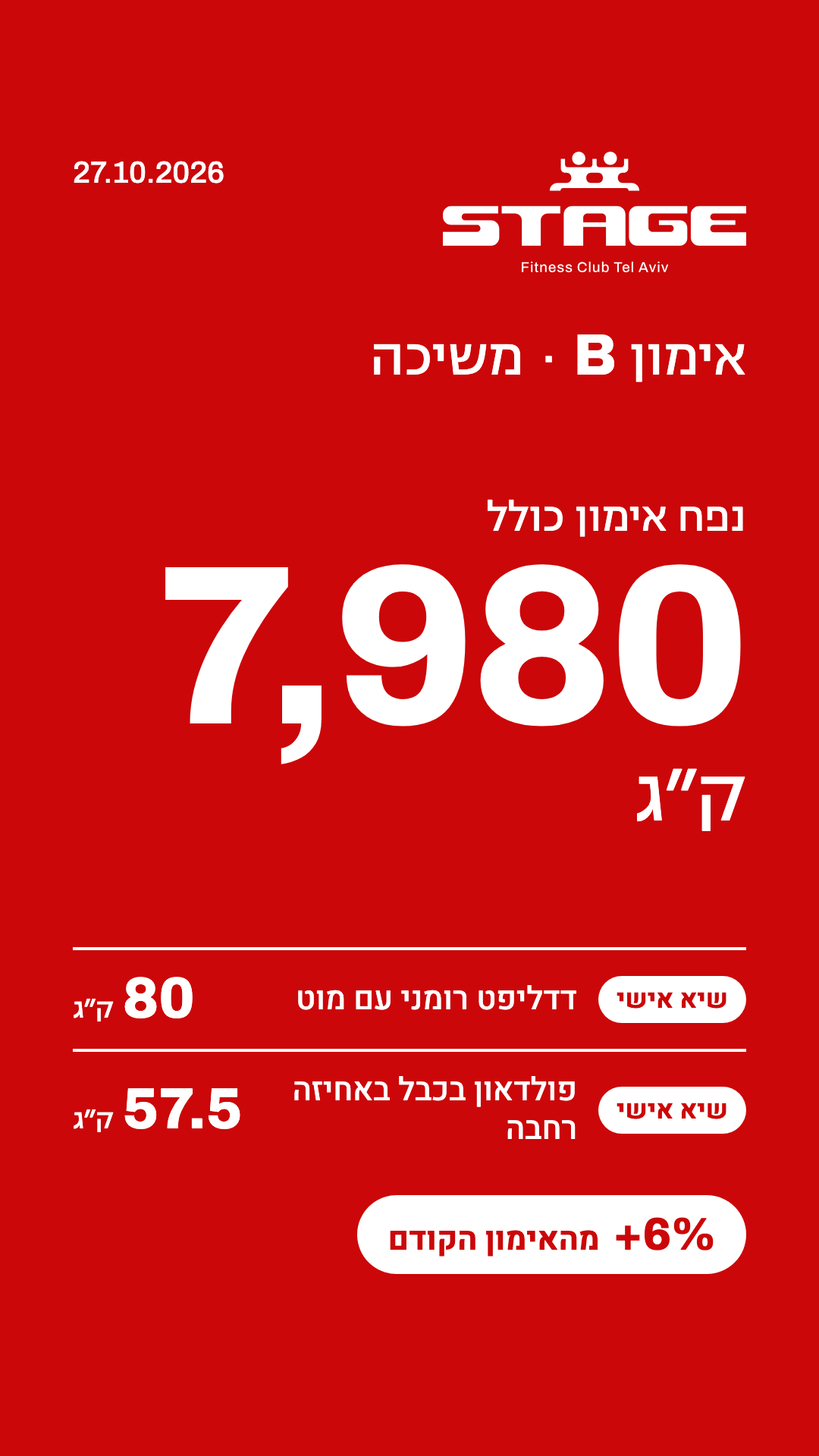
- The finished workout is the content. People post a run on Strava because the card looks good and shows a result. A workout card does the same: total kg lifted, new personal records and the change from the last workout.
- The post carries the brand. The Stage logo and the studio name are on every card. A trainee shares a proud moment, and their friends see the studio. It costs the studio nothing.
- The card is made for a story. It is 1080 by 1920, in the studio colors, in Hebrew right to left. The trainee can switch parts on or off before sharing.
- The app gives a reason to come back. Records, points, ranks and streaks come from real workout data. A good number is a good reason to post.
What I built
- Trainee app. A guided workout with one screen for each part, the last weights, a draft that stays on the phone, and saved workouts.
- Coach tools. A cycle builder and an exercise library with video upload.
- Roles in the database. Trainee, coach and admin. Supabase row-level security enforces them, not only the screens.
- Story card. A real image made from the workout data, with the studio logo.
How I worked
I built Stage with Claude Code. I started from a questionnaire for the studio owner, a competitor study of the Strava share card, and a written action plan with phases. I tested on real iPhone and Android phones before the pilot. Next steps are the link to the studio's Arbox member system and the pilot with real trainees.
Next project
Gate Vision